as professionals is competence in accessing and sharing knowledge."
Connie Malamed
Hello!
I am here to share about something I am really proud of being part: iTDi.
I love iTDi because it has made the cutting edge of ELT knowledge available to teachers around the world in a very democratic way through free and affordable online courses and webinars.
One of iTDi's initiatives, together with Gallery Teachers, was the Summer Intensive for Teachers, an online free series of speakers sharing their views on issues that they are passionate about. And I was invited to be one of them!
Due to my travelling and course schedule the only day I could present was July, 31st which was even before the official opening on the next day. I hosted my very first webinar and guess what? I loved and it was great fun!
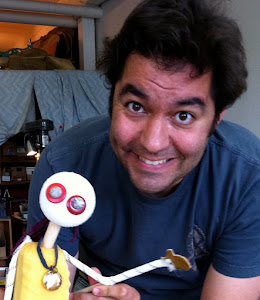
Buddy and I were super kindly hosted by Chuck Sandy and Jason Levine with the great theme song that made all of us full of energy. I was a little bit lost at first, but with time I got more and more comfortable with this new webinar format. I would like to thank everybody who made the effort to attend it live. You guys rock!
You are probably saying "Come on, Juan, where is the link?". Right here, without further delay.
It is very easy to watch my first webinar. Just click here and sign up for a free account with iTDi. Then just log in and find the Summer Intensive for Teachers. My webinar is the very first one.
Get yourself some coffee, tea, or lemonade and enjoy the course with Buddy the Frog and me.
It was a great experience and I look forward to hosting another webinar. I am then officially open to invitations!
Which part did you like the most?
Do you have any hints for my next webinars?
I am very happy to present you an interview with an educator, and an entrepreneur I deeply admire: Sosô Uribe Conti Ranzi, who happens to be my sister, my partner, and the General Director at Juan Uribe Ensino Afetivo, the school we both founded here in São Paulo, Brazil. But how could I interview her if I know pretty much what she will answer? In order to make the interview more natural and revealing I decided to invite my dear friend Naoko Amano to interview Sosô. Naoko is the founder of Yellow Banana Kids Englishin Kishiwada, Japan. She was a fantastic host when I visited her school in 2013. Naoko is also part of the iTDi family and I am grateful to Barbara Sakamoto for having introduced us to each other.
It is with great honor that I have connected these two lovely educators and here I present this interview:
Naoko: Congratulations on
the 20th anniversary of your school! I saw the great pictures of your special
flea market. Could you please tell me more about your feelings about this
anniversary?
Sosô: Oh Naoko! It’s a
feeling that is really hard to put into words! It was a great pleasure to see
kids speaking English spontaneously and confidently. Families were together and
everybody was communicating and having fun in English!
Naoko:Yes! I was able to
see that all the families are so happy to be there! That's wonderful, Sosô.
What are some of your unforgettable memories of these twenty years?
Sosô: There are so many! It's rewarding to see that people that
worked here left their mark and have made this school a better place. It's beautiful to know that students that studied here with us are starting their professional careers and that deep inside I know that our English classes have contributed to their
success! Another lovely memory was when we
rented this house we are in right now! Moving to this new house was a big step for us, because we grew 4 times in size!
Naoko: That's really
inspiring, Sosô. I've heard about you a little bit from your brother Juan, whom
I always meet in congresses here in Japan. But I'd like to know more about you.
How did you start teaching English to children?
Sosô: Wow….that was a
looong time ago…. I started my first class on May 10th1996… 19
years ago. I was only 17 years old then! I started teaching a 2-year-old boy
called Christian and I fell in love with teaching as I saw that I was much more
able and creative that I thought I was. As a result, Christian learned much
faster that I could imagine.
Naoko: Oh! That is a very
interesting story. Can you recall any of the classes you had with him?
Sosô: I used to spend the
whole afternoon with him and we did everything together - we cooked, played
outside, we made projects, played with his power rangers, watched movies, and
sang songs. He liked hunting treasures and playing with his wild animals
figures. I remember that once we made a huge cardboard boat and played there
for hours!
Naoko: That must have been
fun. But how did you go from teaching this very first student to opening the
school with Juan?
Sosô: As I started
teaching more and more students, Juan and I had a turning-point conversation in
which we decided to open our own school. At the age of 17, I was reading
Brazilian laws concerning hiring people.
Naoko: You were so young then. How many students
are learning English at Juan Uribe Ensino Afetivo now?
Sosô: Currently there are
252 students from two to twelve learning English with us. We have 102 students
having classes at their homes while 150 come to our school.
Naoko: That is a lot! I am
sure you have 252 students, parents, and teachers smiling. That’s wonderful!
Sosô: Thank you, Naoko. I
love teaching and I also love managing the school!
Naoko:What do you currently
do at Juan Uribe Ensino Afetivo?
Sosô: Today I am the General Director, which includes thinking about our growth, envisioning new challenges, checking the quality of our classes, and learning about families' satisfaction.
Naoko: I saw in many pictures that you always have a puppet with you. How did you start
using them to teach English?
Sosô: In 1996 Juan and I bought six hand puppets which
later became our logo. We always had them with us and they called
everybody’s attention. Today we have more than 80 puppets here at school. The
educators who work with us learn how to use puppets in our initial course, but
they are not supposed to use them every class. We are always watching many
puppeteers, taking courses, and getting better and better at it.
Naoko: Eighty puppets!?
That's a lot! I saw your fantastic and heartwarming DVD in which you also use
puppets. What made you film it? How did you film it?
Sosô: That was a
dream-come-true project! In 2008 Juan filmed me telling "The
Gingerbread Man" and we put it on YouTube. Many families watched it and told
me that I had talent telling stories and that I should record a DVD. I let this
dream rest for almost 4 years until I met the Cama family in October 2012.
Together we decided to pursue this dream and we came up with different
storytelling techniques to teach English to children through fairy tales. After 18
months, the DVD was finally released and now kids from all over Brazil can
learn English with us!
The DVD was filmed in a
cinema studio with professional microphones and movie cameras. I had my “actress”
day starting the first story at 7 am and finishing with the tenth one at 9 pm.
By then I was exhausted, but really happy!
Naoko: It sounds that must
have been both exciting and hard work! What were some of the most difficult
aspects while shooting the videos?
Sosô: I guess it was during the shooting of “The Three Little Pigs” when I had to make the second pig look down to
the camera (I was behind a wall - and I couldn’t see where the camera was).
Editing Hansel and Gretel was also a challenge as we had to make the narration
match the scenes. :)
Naoko: I love your warm
voice and your friendly way of telling stories. I immediately felt drawn to
your story. Is there anything in special you pay attention to when telling
stories with puppets?
Sosô: Oh Yes! Besides the
story itself, I pay attention to the voices, movement of the puppet’s mouth and
body, and possible jokes or charades I will tell. While storytelling in
the classroom, I make sure to take into account the comments of the students
too! It’s really fun! You should definitely try it too!
Naoko: Wow, it seems to be
very difficult and I certainly need some training myself, but I’m interested in
it. On the DVD, your puppets are really alive and we felt as if we were in the
story!!
Naoko: What are you doing
in the picture you look like a ninja?
Sosô: Just posing for the
picture! We had to use this outfit, so our hands and heads wouldn’t appear in
the video.
Naoko: I
was also very excited to see you using kamishibai in your storytelling. It is a beautiful Japanese technique we rarely see here in Japan. How
do you like telling kamishibai stories?
Sosô: Kamishibai stories are really different and everybody loves them, as they
do not exist here in Brazil. I always have a great time telling them!
Naoko: I am glad to hear
that people love our tradition. Here in Japan, we usually tend to look for new techniques from
overseas, but we definitely should reconsider our work in the light of our own Japanese
tradition.
Naoko: Thank you very much
for taking the time to talk to me. You have inspired me a lot. I was able to feel your passion for teaching as well as your gentle and beautiful heart. I’d
also like to thank Juan Uribe for giving me this wonderful chance.
Sosô: Same here. It was
really nice “talking” to you and telling you a little bit about the school,
myself and the DVD! :) Come visit me here in São Paulo!
Naoko: You too here in Kishiwada!
Wow! What a great interview!
Thank you so much Naoko and Sosô. I sincerely hope that your families can meet each other some time in the future. Would you like me to interview any educator you admire? Tell me and I will give my best as always!
Sending everybody a kamishibai hug from São Paulo,
I met Eric Kane in 2013 when I attended my first JALT conference in Kobe, Japan. Eric is that kind of guy that you will remember him after you have met him. He is a kind, creative, and energetic teacher who is always singing, thinking, and sketching how his ideas can become either songs, books, or videos. After the conference in 2013, I had the great pleasure of being at Eric's house for a week in the city of Omihachiman and going many times to ELF Learning, the school for young learners he founded many years ago. In our talks he shared that ELF stands for Everybody Loves Fun, which defines well the mood children experience at his lovely school.
It's my great pleasure to interview Eric, who is both a friend and a professional that I admire and respect immensely.
Juan: When I see you interacting with children, I notice that your interactions come very naturally and full of caring and purpose. It even seems that you were already born a teacher. Please share with us how you have become an English teacher.
Eric: When I was about 16 I had a meeting with my guidance counsellor in high school. This is someone who helps students identify which career they might find rewarding or interesting. Her first question to me was, "What do you see yourself doing in the future?" I told her that I wanted to be a motivational speaker! I'm still not sure where that came from, but I think I might have known even then that I wanted my life's work to help others in some way.
Juan: I have been to your talks and you surely have inspired other teachers to publish their materials. I had the great pleasure of being with the children and your great team in the cozy classrooms you have at your school. How did you start ELF? How has it evolved since its early days?
Eric: Great question and a very amusing answer. I started the school after teaching for 6 years at a private language school and a private junior/senior high school. I told my wife that I would be happy to stay in Japan, but I wanted to quit my job and open my own English school. She agreed and we put all of our savings into a building, got it ready and opened the doors.
We furnished it with wooden furniture in an old Japanese house. I played music and had coffee or tea ready as the students came in. It was a very pleasant place to be. Physical environment was and is very important to me and I wanted to create a space that quietly whispered, "You're welcome and you're safe."
The funny part is that when I opened I told my wife that this would be strictly an ADULT English school. I had been teaching mostly kids for 6 years and must have needed a break. After a year or so some of the seniors in the neighborhood asked me to teach their grandchildren, so I went down to the used furniture place and picked up a nice cedar table for the kids. I found myself really enjoying the classes. We laughed a lot and I found myself building a strong connection with the students...much closer than I had ever become with my adult students.
I think it was there purity. They had no reservations if they trusted you. Build the trust with a laugh and they would follow. I found myself having a good amount of success with these students despite the fact that, looking back, I really knew little of what I was doing!
When my daughter was born I immersed myself in books on childhood and language development. The words were profound and I found myself self-reflecting as I flipped through the pages. How can I use this information in my classroom? How do we really learn or acquire language. More and more it became clear to me that, at least with the youngest learners, it was much more than just language. It was about learning how to communicate with one another at all costs. This realization has guided much of my teaching since then. After a while my daughter's friends started to join the school and I found myself enjoying the classes more and more. Ever since I've slowly moved away from teaching adults and 2 years ago we closed our doors to all students over the age of 12! I laugh every time I think about where we started!
Juan: I would have never imagined it if you hadn't told it, Eric! As you know I strongly believe in affective language learning. How do you see affect being lived in the everyday life at ELF?
Eric: One of my favorite teaching quotes is, "If a child can't learn the way we teach, perhaps we should teach the way they learn."
I believe that children learn naturally if we give them the right environment, opportunity and a little patience. Unfortunately we find that parents are often the most impatient with the learning process. The kids are just fine!
That's why we've made an effort to discuss how children learn with moms and dads. If they understand that (in our case) language learning is largely a natural process at this age, they generally are quite happy to back off and not insist on meaningless tests and assessments. And more often than not, they are surprised at the results.
Most of our students only come once a week, so we try and spend as much time as possible in an interactive environment. We use many picture books to discuss characters and illustrations, to develop predictive and memory skills and spend whatever time necessary helping them to understand the meaning of the story. We also use a great deal of songs in creative ways, often with students creating their own versions of the songs! And one of my favorite activities is to put down an assortment of flash cards on the floor and build a story with them. They LOVE that.
Juan: In my travels around the world, I have visited many successful schools and yours is certainly one of these. In your opinion, what is important for a language school to thrive?
Eric: Big question! For me, personally, it's about creating a great space, hiring the right teachers, training them well, communicating goals and teaching methods to parents and students and then following through. Pretty much the same as any other business I think.
Eric published this amazing book!
Juan:You have launched books in the area of phonics, which have been very well received. What are the new features you have included in the books?
Eric: With phonics and other materials I think it's less, "What's new" and more, "What's the Combination." We tried to combine a number of goals in a clear, classic layout that kids will love and teachers will find both effective and easy-to-teach. The main spreads are designed to be very clear while the activity sections are designed to provide opportunities to dig a little deeper into the English language. So far it seems that we have hit a sweet spot with students, parents and teachers giving us a very big thumbs up!
Juan: Could you share with us how you create and produce your lovely videos?
Eric: I could, but then I'd have to kill you....
Seriously, there's no rhyme or reason to it. Many of the videos are based around our curriculum, those are the videos that I have to make for the kids to have exposure to English outside of the classroom. For the song videos, it's often just a lot of fun! Sometimes I make the music first. Sometimes the video section. It really is all over the place. I just try my best to use great visuals, great audio and make them fun whenever possible!
Juan: How was the partnership with Mari Nakamura and Patricia Daly Oe in Lily and the Moon?
Eric: Mari and Patricia and I have a fantastic working relationship. We each bring different skill sets to the table and each of these sets compliments the other. For me, the decision to work with and publish Lily and the Moon was made a no-brainer because it meant working with two lovely human beings!
Juan: Which message would you leave to English teachers of young learners around the world?
Eric: I suppose I would remind other teachers to focus on being an example of a great communicator. I've found that the more I focus on sincerely trying to connect and identify with students, the more successful they become.
Juan: Thank you so much for this great interview, Eric!!! Would you like me to interview anybody you know? Do you have any suggestions for this section of the blog? Write me and let me know your thoughts!
During my world tour I have had the great pleasure of being and learning with over 2500 children and 460 teachers in many different and very diverse countries. When I close my eyes I can recall the joy of children during my Buddy shows and the engagement of teachers during the affective language learning sessions I have given. Watching yourselves through the eyes of others is a very intense experience as it allows us to see how we stand, talk, and interact with others. More than that, it allows us to really rediscover who we are.
I would like to thank Jim George from Luna International in Matsumoto, Japan and Ansemf Bae from FIN English in Daegu, South Korea for having gracefully created videos of me during my sessions and shows. These sounds and images have allowed me to know myself better and are valuable gifts that I will keep forever.
Thank you so much Jim and Ansemf for taking the time to create these lovely videos.
It's my great pleasure to share them now with you.
The first one shows scenes from the Affective Language Learning session given at JALT Shinshu in Matsumoto:
The second one is about a frog that visited Matsumoto:
And the third one shows highlights of two shows that I did with Buddy in two different schools:
Hope you have enjoyed them as much as I do.
Which was your favourite moment? Leave me a comment!
I believe not everybody has seen the beautiful Indian movie "Taare Zameen Par", which has been given the English name "Every Child is Special". The movie is about Ishaan, a boy with dislexia, who has been sent to a boarding school, because his family believes that he is just too lazy. There he meets Ram, a very special Art teacher, who changes the path of his life.
Let's check some affective teaching scenes from "Taare Zameen Par"!
Here we see Ishaan in one of his art classes at his new boarding school. His teacher Ram noticed that Ishaan is a student with dyslexia after having seen his notebooks and talked to his family. He then prepared this pedagogical intervention with the whole group to foster.
Ram involves his class by telling a very well crafted story, full of rhymes, humour, and surprise, in which he presented the difficulties some students had while reading and writing. To the surprise of students, he revealed that these struggling students were Einstein, Leonardo da Vinci, and Picasso, among others. By involving students in his narrative, Ram dismantled the mental concept that struggling students are helpless and doomed in life. Quite on the contrary, the teacher emphasized that their schools were limited and that they could not see how these gifted students could see the world differently. He also explicitly taught the values of perseverence and resilience when he emphasizing that there was not only inspiration, but mainly a lot of transpiration involved in reaching success.
The answer for the last question you will see in the next segment.
I swear I didn't do it on purpose, it is just how I was able to import the video.
Well, a little suspense is always good!
Well, you probably knew his teacher Ram would say he had dislexya too, didn't you? This moment of disclosure is a beautiful one, mainly because the teacher gains rapport by verbalizing what his father thought of him.
Ram then allows Ishaan to have success by offering an outdoor activity in which he could use his spatial and creative skills.
It continues in the next one...
In this classic teacher movie sequence, we have Ishaan gaining self-esteem and progressing due to the work of Ram. Ram used a sensorial diversified approach that made reading and writing active and concrete by the use of writing sand, clay, chalk, touch, and movement.
As one commom comorbity of dyslexia is ADHD, Ram provided headphones and electronic games for Ishaan to concentrate himself. Ishaan had the double task of learning to read and write in both Hindi and English, with their two very different alphabets!
The scene in which both are admiring Van Gogh's painting is priceless. Both admire each other so much!
Hope you have enjoyed this one. Soon we will have more affective teaching movie scenes.
Let me know if you would like me to analyze a special movie!
It's a great pleasure to return to Mr. Holland's Opus to analyze more affective teaching scenes. In this post I will comment on Mr. Holland's work with Russ. Mr. Holland is a teacher who is discovering how to become an affective (and effective) teacher. Russ is a student who needs to join the marching band to continue playing football for his high school.
At first, we can see that Mr. Holland doesn't really know where we to start and makes some remarks with implicit content that does not welcome the student. These are "Do not apologize, you haven't done anything yet." and "Do you know how to read music, even a little?". Implicit in these words are the ideas that the student will have to apologize in the future and that everybody should know even a little of music reading. These remarks certainly do not convey the idea of success and support that students should receive at the beginning of a course.
Then, Mr. Holland gives Russ choice about which instrument he would like to play, which allows the student to gain some control over his learning. When Russ answers electric guitar he uses humour, which is a powerful rapport builder. He then makes suggestions that eventually touch Russ with great excitement.
Here we see Russ struggling to find the beat in class. Mr. Holland singles him out impatiently and that makes him exposed in front of the group. Being aware of Russ emotions and realizing what he has done, Mr. Holland tries to fix it with humour by mentioning that other people are also having a hard time. To create an even lighter environment he uses humour again with the spit valve issue.
When Russ suggests that he will quit, Mr. Holland shows faith in Russ's success by cutting him short and saying that he knows that Russ will work hard. He chose to do it sharply, but maybe acknowledging Russ's feelings and sharing stories of other students' initial struggles could be an alternative way to address the issue.
Continuing the individual work, Mr. Holland incorporates movement, modelling, touching, and the use of a mock drum to prepare Russ for success with the real drums. Mr. Holland uses these actions in a very lighthearted way, conveying that he knows that Russ will eventually get it. He was also daring and creative to beat Russ' helmet for him to have the rhythm in his head!
Mr. Holland "surpraises" Russ when he stops the rehearsal and validates all the effort Russ has put into learning in a public way. The smile on Russ' face is beautiful, showing how this dedicated work has increased his self-esteem. Mr. Holland's look also shows pride on Russ' achievement. It's such a beautiful scene! Pure joy of learning!
Here we can see students showcasing their final product to the community. The marching band allows families to see their children succeeding in new social roles. The support of other teachers and teachers' family members makes this event a true communion. The look on Russ and his father of pride is just something out of this world!
It was a real treat to share these affective teaching scenes with you!
Do you have movies you'd like me to write about? I'd love to hear from you.
It's with great pleasure that I share here my first videopost!
For it I chose one of my favourite themes: Puppeteering.
Preparing, filming, and editing weren't that hard. Enjoy it!
Here you will find:
How to hold a puppet
Bringing a puppet to life
Introducing a puppet to students
Things puppets do
The triangle technique
More ways to use puppets in class
Buddy's favorite
Check also these other hints I have written about using puppets.
Here I have a video with 32 different puppets you can make!
During my Master I learned about Parent-Child Interaction
Therapy, which is a therapeutic method that aims to improve the disruptive parent-child
relationships through the change of confrontational parent-child interaction
patterns. The therapeutic sessions move from child-directed interactions to
parent-directed interactions.
Here is how sessions work: a parent stays with his/her child
in a room with toys. The therapist sees them through a one-way mirror and
guides the parent through a bug that is worn. As interactions happen, the
therapist either says what the parent should say or gives the command to the
parent. In fact, the sessions are quite fun to watch when you see that at first
parents miss the opportunities and that later they rejoice when they see that
their children are getting closer to them.
I thought that the child-directed interactions were very
interesting and that they could also be applied to the teaching of English to
young children in small groups, as they nurture a space in which children are
validated and can express themselves.
These interactions can be remembered by the acronym PRIDE.
P – Praising
R – Reflecting
I – Imitating
D – Describing
E - Enthusiasm
Below I outline these:
·Praising is
done when a teacher gives specific feedback to show children that he/she is observing,
validating, and accepting their actions.
Example: Teacher: I notice how you are using such nice manners.
I can see you are separating the pieces carefully.
·Reflecting
is when a teacher shows that he/she has listened a student by paraphrasing
what the student has said. A comment should be added for the interaction not to
be plain echo.
Example: Student: My favorite is Play-Doh.
Teacher: Your favorite is Play-Doh. I like it too
·Imitation
happens when the teacher does similar things to what the student is doing,
such as in their posture, language, and actions. It’s amazing how this works
and how they feel valued when we copy something they are doing. This builds a
path for them to copy us later.
·Description
happens when the teacher narrates what the child is doing without making
any value judgement.
Example:Teacher:You are feeding the chickens.
The cat is walking around the house.
·Enthusiasm
should be present in all interactions to show children that they are being
accepted. It
should be conveyed through intonation, volume, eye contact, and
gestures. The tone of voice
should be normal, without any type of patronizing.
I believe that these interactions can be of use to language teachers
in the first moments of classes and in situations in which rapport has been
broken. These child-led interactions can be balanced with silence and laughter.
PCIT suggests that during the child-led interactions the
following should be avoided:
Making any questions
as these guide the play or can have embedded value judgements or hidden
commands.
Example: What do you think we should do now?
Why did you do this?
Giving direct or
indirect commands as these might be rejected by the children or imply that
the child is doing something “wrong”.
Example: Let’s color now.
You do the house and I will do the garden.
I think we should finish now.
Criticism does
not nurture rapport, as it does not value how children do things.
Example: You know that isn’t right.
Look how you can do it right.
Here I have selected a video that shows a PCIT session taking place. Check how the imitation builds amazing rapport!
Let me know how you liked it and how it can be applied to your classes.
I'd love to hear from you, as it motivates me to write more often and to interact with other educators.