Showing posts with label Interview. Show all posts

March 20, 2017

Interviewing Affective Educators: Beatriz Siqueira


I met Beatriz when both of us were classmates studying Education at the Catholic University here in São Paulo. Since then, Beatriz has worked at several schools, including  Juan Uribe Ensino Afetivo, and has recently ventured to live in an amazing island off the Brazilian coast. There in Ilha Bela, Beatriz shares her time between her own English school for children, which is called Beatriz Siqueira - English for life, yoga classes for children, and her personal projects. Needless to say, I admire Beatriz both personally and professionally. Here is our interview!

Juan: I would like to thank you again for the lovely days I spent with you and your husband Jorge in the inspiring place you have on the beach. I have really enjoyed being with you and learning more about your work teaching young learners in the lovely area you have in your house. In our conversations I have notice your eyes shining when you talk about promoting the holistic growth of children. Could you please share what this is in your view and how you do it?

Beatriz: What I call holistic growth, or development is looking at the student as a whole, looking at everything the student is and brings with him/her when they come to my class. I happen to teach mostly kids, but it's the same with kids or adults. So, for example if the student comes to your class very angry because he/she just had an argument with his/her mother, this has somehow to be included in the class, or I might need a moment to deal with this before I start the class.  

Beatriz: I have to know,  as a teacher,  that the student's head is going to be on the argument at least for a while. Notice I'm giving a very simple example, but many times teachers don't do it or don't know how to deal with student's emotional issues, because they don't know how to deal with their own emotional issues. So in a deeper level, I'm taking about emotional education, which is something we, as professionals and persons,  don't know how to do because we didn't learn it in our education, at home, in school, or in university.


Juan: What changes have you noticed in your students'  thinking, talking, and doing as results of your educational approach? 

Beatriz: Some changes happen slowly and others very fast. Something that I always work on is expressing feelings. I encourage students to say how they feel when we have any kind of conflict in class, instead of saying this is right or that is wrong. In the long term, they start doing it not only in class, but also at home too and in other situations at school.

Juan: I saw pictures of you telling stories, creating scenarios, and living adventures in English with the children. How do you see the relationship between fantasy and language learning?


Beatriz: Fantasy is one of the ways we people express ourselves and for children fantasy lives very strongly. It's a pity that after kids grow a little and intellect grows stronger, regular schools abandon or decrease very considerably the work on stories and fantasy, and creative activities.  I believe fantasy never actually die in us, even as adults. So it is certainly one very rich way of learning that is very much ignored by traditional education. 

The more involved the student is in the activities, the better he or she can learn because it becomes something very meaningful. So fantasy should be part of the teaching/learning process as well as intelectual activities. 

Beatriz: I have to know as a teacher that the student's head is going to be on the argument at least for a while. Notice I'm giving a very simple example, but many times teacher don't do it or don't know how to deal with student's emotional issues, because they don't know how to deal with their own emocional issues. So in a deep level, I'm taking about emotional education, which is something we, as professionals and persons don't know how to do because we didn't learn it in our education, at home, in school or in university. Juan: What changes have you noticed in your students'  thinking, talking, and doing as results of your educational approach? 

Beatriz: Some changes happen slowly and others very fast. Something that I always work on is expressing feelings. I encourage students to say how they feel when we have any kind of conflict in class, instead of saying this or that is right or wrong. In a long term, they start doing it not only in class, but also at home too and in other situations in school.

Juan: One area that I am really interested in is creating the conditions for learners and teachers to be fully present when they are together as I believe this presence can not only boost learning, but also make it very memorable. I remember that you are mentioned having a minute of silence in the beginning of classes and that students really enjoy it. How did you start fostering mindfulness in your classes?

Beatriz: This is a very good start, to have a minute of silence in the beginning of classes. It makes them very present and children realise that. As a result, they start using silence in other moments of their lives, before they go to bed, before an exam. But the teacher must practice this as well, it has to make sense for the teacher, otherwise it will become an empty practice and the students will be the first to notice, it just won't make sense to them and it will definitely not work. 

Juan: I love when students talk about how they have progressed and are aware of how they learn best. How aware are your students about their own learning? 


Beatriz: Very much aware. This awareness gives the students a sense of responsibility in their on process ,which automatically makes them participate more actively. This is actually the "test" or "exam" I apply to them instead of giving them a grade.

Juan: What inspires you personally and professionally? Where do you get your ideas and energy from?

Beatriz: What inspires me the most is the change I see in my students and families. Working with kids means working with the whole family, and we as teacher should know the responsibility it entails. When I see how much English my students are learning, it makes me want to work more and more. Ideas and energy come from the interaction with students, the every day life, research, meditation, the awareness of my place in the world, my hobbies, my free time, vacation. These are things that nourish me.

Juan: Which message would you leave to teachers of young learners around the world?

Beatriz:  I'm going to quote B. K. S. Iyengar, an amazing Yoga master that left a great legacy to the world : "Teaching is a difficult art, but it is the best service you can do to humanity"

Juan: Thank you so much Beatriz for the lovely interview and congratulations on your amazing work! 


And here we celebrate one more interview that casts a light on how English can be learned affectively around the world. Do you know anybody that you think should be here in the blog? Let me know and I will interview this teacher! 

Hugs from Brazil, 


Did you like it? Share it! 
Thank you! 


May 25, 2016

Interviewing Affective Educators: Beatrix Price


Have you ever thought about going to a country and staying there just to learn from one particular person?   I thought about doing so as soon as I met Beatrix Price at IATEFL last year. I was already planning how long I was going to stay in Budapest, when I learned that Bea and I would be working together for two weeks. I could not believe it, I was so happy! I immediately wrote Bea and she was happy as well!!!

The two weeks were great and we were able to learn a lot from each other and enjoy each other's company having lots of tea. But I would not let her go without interviewing her first for our blog. 
Here is our interview!

Juan: Let’s get started. When did you discover that you wanted to become a language teacher?

Bea and I met at IATEFL in 2015.

Bea: That is a good question. When I was a child I wanted to be a kindergarten teacher because my mother was a kindergarten teacher. Then later when I went to school I still wanted to be a teacher and my desire had never changed. I was 14 or 15 when I first met English as a language and then I decided to become an English teacher. But as I grew up in a communist country, where it was impossible to learn English, it took me quite a long time to learn it, so only when I was twenty seven I finally started learning English. Before that I was a Russian teacher and a Hungarian literature teacher.


Juan: It is very interesting that you have mentioned that your mother was a kindergarten teacher. How did she influence you? Were there days that you would go with her to school?   


Bea: Unfortunately at that time it wasn’t possible to do this in Hungary. But somehow I picked up the abilities or skills to work with children.  And there was also another very important experience that I lived when I was a child. We lived very near the Croatian border and my parents had friends from Croatia. In fact, these were their best friends, so we visited them and they visited us very often and there was this constant contact between us. Unfortunately they didn’t have any children , so I didn’t get to learn Croatian fluently, but I always heard this other language in the background. My father was sort of the interpreter in the family as he told us where we were going and what we were going to do.  One fascinating thing that I discovered just a couple of years ago is that my mother didn’t speak any Croatian and  her friend didn’t speak any Hungarian and even so they were friends for thirty or forty years.  It was a wonderful experience to have so many holidays together. Now looking back, I recognize this communicative competence that is so important in the lives of language teachers and language learners.  

Juan: Wow, what a beautiful memory! It’s truly amazing how your mom and her friend were able to communicate.

Juan: I saw your presentation this year at IATEFL in Manchester and I was fascinated by the way you promote language learning while you play with children.  How important is affect when learning a language and how do you incorporate in your teaching?


Bea: We all know about  emotional intelligence nowadays because it has been a buzz word for years but if you just look at natural cultures and how mothers, grandmothers take care of their children, then we can learn a lot. You have to feel the children and children have to be at ease with you when you are teaching them, if they are afraid of the atmosphere or the situation, then learning doesn’t take place, but if they love what surrounds them, then learning will happen in a much more effective way.

Juan: How did you become an English teacher of young learners? 

Bea: About fifteen years ago and before that I had never thought I would end up becoming a teacher of young learners.  Life brought me this experience as my children are bilingual  (English/Hungarian) and I had to teach them together with other children who were in the same classes. So I had to discover a method, something that my children who already spoke English would be happy in the class, just as well the other children who came to learn English. So then I started searching for games that are global and multicultural, so I collected a lot of different activities that are played all over the world and that are enjoyed in different cultures, regardless of language, and then I added the language element to it.

Everybody was happy in my class all the time and then I saw how much the other children learned, those who came to learn English. They had a massive vocabulary through the rhymes, songs, poems,  and everything that we enjoyed doing together. Everybody knew it wasn’t about language learning, it was about having a great time together. I think it is so important for children to enjoy what they are doing because many times we adults impose our own will on them and then they end up not having much choice.

Juan: Could you tell us a little bit about your ten-house model?

Bea: When I did my masters’s degree I wrote my thesis on movement accompanied by language learning, and the ten houses were the skeleton for my thesis.  I also included Vigotsky’s and Krashen’s theories in my thesis.  The houses really go through the natural development of the child, when we imagine that the baby is born and the child is in the cradle, the first thoughts that the baby has are his own hands and fingers, and the baby looks up and starts playing with his own fingers. A little bit later when the children are a little bit older, mothers take the children and gets them in their laps and start playing with their palms, their fingers with ticklish games and all that those that belong to the children’s body. In previous cultures  there were no plastic toys and Disney films and other things to entertain the children, so mothers and their children would build very beautiful rapport and that’s how children started to learn language through this emotional bond.

So the first things are the finger games, which are not only important because the mother plays with them or children play on their own, but they are also very good for fine motor skills. And this is what educators nowadays neglect totally, because children grow up in front of screens, they only touch buttons or they are just watching something. Their fine and gross motor skills are not developed nowadays and children get clumsy to the point they can’t even climb trees.


The other activities in the ten-house model are those that children enjoy in social interaction such as  bean bag games, circle games,  skipping games, and string games. We can find these in every culture,and they are enjoyed by the children because they share. Social interaction is another very important element, because I think a lot of children lack social competence in our world because they are just interacting with cell phones. Playing together has another educational value in my system.

Finger games, bean bag games, string games, and circle games incorporate singing, which is very important. That's because singing is in a different sphere. And then when I take children through these activities that are always a  little bit more difficult for the children and they want to learn that skill that is very important for them as well. These manual skills are always a little bit higher than their actual competence, just as Krashen says that comprehensible input should just a slightly higher than the child’s language competence. In my model I put the skills competence, so they want to learn the language together as well.


These activities are always accompanied by authentic English nursery rhymes, songs, and verses,  so children can build a very big vocabulary doing these activities and then after a  while, they start being introduced to real poetry. So after a couple of years of teaching children through these rhymes, I introduce very simple authentic poems to and after this stage we learn in the realm of literature and that’s the finest stage in my learning curve, that’s the last house,  when I can already introduce authentic novels to these children obviously through graded readers or simplified versions or I myself make them accessible to them.

I think that children deserve to be introduced to Narnia in English when they are small as well as Robinson Crusoe, which is my other favourite book. These are all layers that are built one on top of the other.  I think that when we introduce literature, they will become readers, that’s another stage and then authentic learning takes place. And they are able to learn in English and look after their own language development.

Juan: Which advice do you give to teachers of young learners?


Bea and Anastasya sharing their storytelling board. 
Bea: Learn lots of songs and  look at mother goose nursery rhymes and choose the ones you will teach according to your taste. It’s most important that you teach according to what you like, just believe in something and teach through that. And children will love it because they can see you are enjoying it and you will love it too. I think we can never stop learning and learning children’s rhymes is not a childish thing. We can learn from each other and even nowadays meet other colleagues around the world and then share our treasure with them. We should not hide what we know, we should make it accessible to everybody.

When teaching children it is very important not to simplify the language, as when you look at natural language acquisition, when a child learns in her own environment, everybody speaks in full sentences with lots of language, and I think that in second language acquisition we should do the same, providing a lot of authentic language to children.  I try to do it in a rhythmic way  because rhythm carries language, specially in songs, chants, verses, and nursery rhymes that have this natural rhythm that lives in the child’s system or body. As a result children are introduced to a lot a language and they will deduct meaning from this rich language for themselves and that’s how language is built up. Not specifically taught to them saying that this is this and that is that, but allowing the child to recognize the words in the songs, in the verses, and in the poems.

Juan: You have given me this amazing rainbow string. Where did this idea come from and which other tricks do you have in your teaching?


Bea teaching Kasya the witch's story in Paris


Bea: First of all, I felt that as an adult I wasn’t able to learn any of the tricks, but fortunately I had a very good friend who knew many of these tricks. And he happened to drop in my English lessons and he didn’t speak any English and he enchanted the learners in a second. I was a little bit jealous and I wanted to learn those tricks too.


As I wanted to enchant the children as well, so I looked for my son's book on string games and I learned one trick which was a huge success.  It took me a long while to learn other tricks and the most interesting thing is that when I introduce it to children they just pick it up in seconds.

I only know three or four stories altogether and I see that storytelling with strings is amazing not only for children but for adults too. These are well known in many cultures such as in Turkey, Malaysia, Indonesia, in central Europe, Western Europe, well everywhere. So I encourage everybody to learn a couple of string games.

Juan: Being a very affective teacher educator, what do you consider important for teachers of young learners to experience in their preparation courses?


Bea: Well, it comes naturally to me it’s and it is also a very conscious process. I try to build very good rapport with my colleagues, I prefer to call them my colleagues instead of participants.  I like to draw their attention to the importance of being an educator as we we have a very big responsibility for the future generations. I see that teaching young learners has become a very big business around the world and we have the responsibility not to let children be harmed by all this business. As appropriate learning is very important, we have to see who our learners are, language teaching ought to be almost like a therapy for children with lots of singing and lots of good things. 


Juan: Do you have a favourite quote to finish our interview? 

Bea: We only remember 10% of what we hear, we remember 40% of what we see, and we remember 90% of what we are involved with.

Juan: Anything else you would like to say? 

Bea: I love you Juan and Buddy too!

Juan: Me too!  


Wow, what an amazing interview with Bea!

Would you like me to interview any teacher in special?
Let me know and then I will get in touch with this person and give it a try!

Sending you all a big hug,


Juan


Did you like it? Share it!
Thank you!

October 30, 2015

Interviewing Affective Educators: Jason R Levine


"Love yourself and your expression, you can't go wrong"
KRS-One


This last August I had the great pleasure of meeting Jason R. Levine, also known as Fluency MC, and working with him during one week in the Gallery Day Camp in Italy. During this week I was able to see Jason promoting learning through rap and I discovered that Jason and I are artisteachers in our own ways. I couldn't have let him go without interviewing him first. Here is our chat: 

Juan: I am really happy that we are working together here in Italy as I had heard a lot about you, but only being here makes me able to better understand your work. Have to tell you that I am your fan.


Jason: Likewise, I follow what you are doing as a teacher and as a teacher trainer around the world. It is interesting to see how my work and your work complement each other. It's really exciting. It's a great feeling to be here.


Juan: I will start our interview by asking the classic question: Who is Jason R Levine?  But don't go thinking that this interview will be an easy one!

Jason: It's funny, there are a lot of Jason Levines out there and I put my middle initial  R to differentiate myself. I do both content creation and also training. I have this persona Fluency MC that I use for the music and the videos.  For me Jason Levine is more the trainer, what is left of the academic side of me.  Fluency MC is the guy that is out there on the ground as well as into content creation and materials design.

Juan: I believe that I identify with you as I believe that I am also a mixture of an artist and a teacher. I can clearly see your very developed artistic side in your teaching. Please tell me how this integration has happened in your life.


Jason:  Glad you see it that way because it hasn't been that long that I have been doing what I do with music. I was a pretty traditional English teacher during the first part of my career. It wasn't really until nine, ten years ago that I really started bringing music and video into it. From the start I was into creating material, in this sense I might be an artist, but what you see me doing is pretty recent. During the first years I was pretty shy.

Juan: I can't imagine you being shy!


Jason: I have a video to prove it, but I am not at the point that I am ready to show that video to people yet! My students used to tease me and they have certainly helped me discover my talent. This is a beautiful thing about teaching, when both students and teacher support and encourage each other in the process.

Juan: What do you take into account when you write your raps?

Jason: I am a big corpus linguistics guy, a collocation guy, and definitely for me what sparks me and gets me going is the lexical side of what I am working with. So if I receive a unit with certain vocabulary, certain structures, I love what I can do with these. I am also very motivated when I see what frustrates teachers and students, such as boring or difficult grammar structures, things that even with a lot of studying and learning students usually do not make much progress with.

Jason: I enjoy thinking about the acquisition, the repetition, and the humour in the songs. It's definitely the linguistic side that moves me in the beginning, but then as I write the songs I often get into storytelling.

Juan: I can see you put a lot of humour in the pictures you choose as well as in the lyrics.

Jason: Humour absolutely! I think that every good artist in some level does something with humour.

Juan: I really like the secret messages that you put in your raps. How do you go about these?

Jason: Thank you. I'm always moved by social messages in art, whether about inequality or about the environment or other important issues. I believe that the subtle messages are the ones that strike you, if it's a comedian who sneaks it in a joke or a singer that inserts it in a song. I don't like it when the message is explicit and  hits you in the head as it is hard to reach people that way. I want people to discover it themselves. To tell you the truth, I don't always notice myself doing it. The other day a teacher pointed it out to me. I can say that I am really influenced by many singers and authors and I like to do it that way.

Jason: Stick, Stuck, Stuck is the first song that I wrote and it is still the most popular song. People point out that there is a message within it and when you listen to other songs the messages are definitely more out there.

Here you have the famous Stick, Stuck, Stuck by Fluency MC :


Juan: I follow your career and I see that you have been travelling a lot and you have been in contact with lots of students around the world. How do you make sense of all this? How has this experience touched you?

Jason: I've been thinking a lot about this lately. The other day I saw some pictures of when I was with students in Palestine and it seems it was such a long time ago. I'm sure you also have this experience of feeling time in a different way when you travel and you have lots of intense encounters. On the other hand, I feel it is strange sometimes as I have had these intense encounters but I haven't seen these people again and I'm not sure what they are doing. As fun and as interesting it is to travel, it can also be hard.

Jason with students in the Palestine!
Jason: What grounds me is the fact that we are all connected through social media, like one student from Palestine can write me tomorrow and say "Hey I watched your video and I remember when you were in Ramallah". I feel really lucky about it. In the past, without this new media, it would have been tougher. I feel lucky to be teaching at this time in history.


Juan: I heard you are coming to Brazil next year, tell us about it.

Jason: I have wanted to come to Brazil for a really long time. Mainly because many Brazilian encouraged me when I taught in New York and also because I have many loyal followers from Brazil. There is certainly a musical connection between American and Brazilian hip hop and I believe the idea of practicing with music appeals a lot to Brazilian teachers. People tell me all the time to come to Brazil so I've got to do it. And it is great to be connected to you and also to other teacher trainers who supported me.


Juan: You are going to have such an amazing time in Brazil, Jason. By the way, I know that you have created an innovative language learning program. Please tell us how the Weekly English Workout Program works and how you have come up with this idea.

Jason: Thank you for asking about the Weekly English Workout. I'm very excited about it as it's a new project.  It's a speaking practice program based on Video Workouts, live classes, and a private Facebook group. It provides intensive practice to enable you to use English in your everyday life. This practice, I believe, is the missing piece for most people. It's been a lot of fun and I'm excited about getting the program into schools around the world so that students can use it out of class to improve their English fluency.

Juan: What message would you leave people that have a talent and would like to fuse it with language teaching?

Jason: That is a wonderful question. Just get out there and do it.

Juan: Any message for the students?

Jason: Wherever I go, I meet one or two students that are really fluent, really excited about English. Some people would assume that they have lived in the country where the language is spoken, that they must have had these great lessons, or that they have the gift for learning another language. But nine times out of ten it is because they really got excited about English from media, they watch a lot of movies, they listen to a lot of music, they read a lot of comic books... The best use of time for teachers is to get their students excited to get out there and go for things that they really enjoy.

Juan: Thank you so much for this interview!  It's been great working with you here at the Gallery Day Camp.

Jason: That was fun!


Do you have a special talent you have incorporated in your classes?
Let me know and you can be the next teacher  interviewed here in the blog!


Sending you a big hug from Hokkaido in Japan,


Juan


Did you like it? Share it!
Thank you!

February 05, 2015

Interviewing Affective Educators: Eric Kane


I met Eric Kane in 2013 when I attended my first JALT conference in Kobe, Japan. Eric is that kind of guy that you will remember him after you have met him. He is a kind, creative, and energetic teacher who is always singing, thinking, and sketching how his ideas can become either songs, books, or videos. After the conference in 2013, I had the great pleasure of being at Eric's house for a week in the city of Omihachiman and going many times to ELF Learning, the school for young learners he founded many years ago. In our talks he shared that ELF stands for Everybody Loves Fun, which defines well the mood children experience at his lovely school.

It's my great pleasure to interview Eric, who is both a friend and a professional that I admire and respect immensely.


Juan: When I see you interacting with children, I notice that your interactions come very naturally and full of caring and purpose. It even seems that you were already born a teacher. Please share with us how you have become an English teacher.


Eric: When I was about 16 I had a meeting with my guidance counsellor in high school.  This is someone who helps students identify which career they might find rewarding or interesting.  Her first question to me was, "What do you see yourself doing in the future?"  I told her that I wanted to be a motivational speaker!  I'm still not sure where that came from, but I think I might have known even then that I wanted my life's work to help others in some way.  


Juan: I have been to your talks and you surely have inspired other teachers to publish their materials. I had the great pleasure of being with the children and  your great team in the cozy classrooms you have at your school. How did you start ELF? How has it evolved since its early days? 


Eric: Great question and a very amusing answer.  I started the school after teaching for 6 years at a private language school and a private junior/senior high school.  I told my wife that I would be happy to stay in Japan, but I wanted to quit my job and open my own English school.  She agreed and we put all of our savings into a building, got it ready and opened the doors.  

We furnished it with wooden furniture in an old Japanese house.  I played music and had coffee or tea ready as the students came in.  It was a very pleasant place to be.  Physical environment was and is very important to me and I wanted to create a space that quietly whispered, "You're welcome and you're safe."


The funny part is that when I opened I told my wife that this would be strictly an ADULT English school.  
I had been teaching mostly kids for 6 years and must have needed a break.  After a year or so some of the seniors in the neighborhood asked me to teach their grandchildren, so I went down to the used furniture place and picked up a nice cedar table for the kids.  I found myself really enjoying the classes.  We laughed a lot and I found myself building a strong connection with the students...much closer than I had ever become with my adult students.  

I think it was there purity.  They had no reservations if they trusted you.  Build the trust with a laugh and they would follow.  I found myself having a good amount of success with these students despite the fact that, looking back, I really knew little of what I was doing! 


When my daughter was born I immersed myself in books on childhood and language development.  The words were profound and I found myself self-reflecting as I flipped through the pages.  How can I use this information in my classroom?  How do we really learn or acquire language.  More and more it became clear to me that, at least with the youngest learners, it was much more than just language.  It was about learning how to communicate with one another at all costs.  This realization has guided much of my teaching since then.


After a while my daughter's friends started to join the school and I found myself enjoying the classes more and more.  Ever since I've slowly moved away from teaching adults and 2 years ago we closed our doors to all students over the age of 12!  I laugh every time I think about where we started!

Juan: I would have never imagined it if you hadn't told it, Eric! As you know I strongly believe in affective language learning. How do you see affect being lived in the everyday life at ELF?

Eric: One of my favorite teaching quotes is, "If a child can't learn the way we teach, perhaps we should teach the way they learn."

I believe that children learn naturally if we give them the right environment, opportunity and a little patience.  Unfortunately we find that parents are often the most impatient with the learning process.  The kids are just fine!

That's why we've made an effort to discuss how children learn with moms and dads.  If they understand that (in our case) language learning is largely a natural process at this age, they generally are quite happy to back off and not insist on meaningless tests and assessments.  And more often than not, they are surprised at the results.  

Most of our students only come once a week, so we try and spend as much time as possible in an interactive environment.  We use many picture books to discuss characters and illustrations, to develop predictive and memory skills and spend whatever time necessary helping them to understand the meaning of the story.  We also use a great deal of songs in creative ways, often with students creating their own versions of the songs!  And one of my favorite activities is to put down an assortment of flash cards on the floor and build a story with them.  They LOVE that.

Juan: In my travels around the world, I have visited many successful schools and yours is certainly one of these. In your opinion, what is important for a language school to thrive?  

Eric: Big question!  For me, personally, it's about creating a great space, hiring the right teachers, training them well, communicating goals and teaching methods to parents and students and then following through. Pretty much the same as any other business I think. 


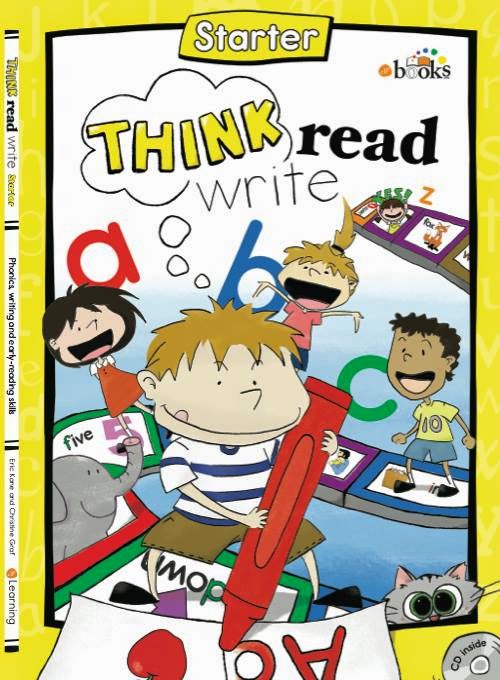
Eric published this amazing book! 
Juan:You have launched books in the area of phonics, which have been very well received. What are the new features you have included in the books? 

Eric: With phonics and other materials I think it's less, "What's new" and more, "What's the Combination." We tried to combine a number of goals in a clear, classic layout that kids will love and teachers will find both effective and easy-to-teach. The main spreads are designed to be very clear while the activity sections are designed to provide opportunities to dig a little deeper into the English language. So far it seems that we have hit a sweet spot with students, parents and teachers giving us a very big thumbs up! 

Juan: Could you share with us how you create and produce your lovely videos? 

Eric: I could, but then I'd have to kill you....

Seriously, there's no rhyme or reason to it.  Many of the videos are based around our curriculum, those are the videos that I have to make for the kids to have exposure to English outside of the classroom.  For the song videos, it's often just a lot of fun!  Sometimes I make the music first.  Sometimes the video section.  It really is all over the place.  I just try my best to use great visuals, great audio and make them fun whenever possible!
Juan: How was the partnership with Mari Nakamura and Patricia Daly Oe in Lily and the Moon? 

Eric: Mari and Patricia and I have a fantastic working relationship.  We each bring different skill sets to the table and each of these sets compliments the other.  For me, the decision to work with and publish Lily and the Moon was made a no-brainer because it meant working with two lovely human beings! 


Juan: Which message would you leave to English teachers of young learners around the world? 

Eric: I suppose I would remind other teachers to focus on being an example of a great communicator. I've found that the more I focus on sincerely trying to connect and identify with students, the more successful they become. 

Juan: Thank you so much for this great interview, Eric!!!


Would you like me to interview anybody you know? 
Do you have any suggestions for this section of the blog? 
Write me and let me know your thoughts! 


Send you all a big hug from Brazil!

Juan


Did you like it? 
Share it! Thank you!

December 09, 2014

Interviewing Affective Educators: Kylie Malinowska


This is a picture Kylie and I took together when
we were saying goodbye to our trainees in Konya. 
I had the privilege of meeting Kylie Malinowska last August when we both taught novice English teachers at the CTS course with SeltAcademy for two weeks in Konya, Turkey. 

During this time we talked a lot about teaching young learners and became good friends. Today I have the pleasure to interview Kylie here in this blog!


But first, who is Kylie? 

Kylie Malinowska is the Young Learner Advisor and Coordinator of the Certificate in Teaching Young Learners and Teenagers for IHWO (International House World Organisation). She is based in Prague where she also teaches and trains for IH Prague and Akcent College. She was one of the course writers for both of IHWO's YL training courses (the IH CYLT and the IH VYL) and has a regular YL column in the IH Journal. 


Juan: Let's start with the classic question to warm up. How have you become an English teacher of young learners? What keeps you  connecting with them and their learning?  

Kylie: Prior to getting into teaching I worked in the Health Care Industry. I loved my job but I was quite sick of sick people to put it bluntly. While I was living in Newcastle upon Tyne (UK) in a house with flatmates from all around the world (All TESOL students at either Newcaslte College or IH Newcastle), I used to give (memorable ahem) English lessons over coffee on a Saturday morning. One day, after mentioning it numerous Saturdays in a row, they all decided that I absolutely had to do the CELTA at IH Newcastle and become and English teacher and went and got the application form for me. 

Those flatmates changed my life. For the better. It would never have crossed my mind to become an English Teacher and certainly not for YL given I considered myself a dementia care specialist and my first degree was a double degree in Health Science and Gerontology (study of the aged). But….I loved it. I still do! My flatmates knew me better than I knew myself. I’ve done my time teaching ESP and BE etc etc and have taught all ages and levels, but I always come back to YL. I just love the energy they give me.


A psychic once told me it was time to work with younger people as they would give my soul energy instead of sucking it out of me. At the time I thought it was all a bit of a joke, but I really do feel like they feed me. Don’t get me wrong, teaching kids is exhausting, but they really give me a lot too. That little shining light in their eyes when they realize they have learnt something new and they are proud of themselves…that…that little sparkle. That gets me every time.

Juan: I love that spark Kylie. Who sparked your love for music ? 

Kylie: I’ve loved music and singing for as long as I can remember. My dad played guitar to us as children and we had sing-a-longs around his knee. My father’s father (whom I never met) was reportedly a wonderful singer. My Father’s Brother is in a band, as is his daughter, my cousin and I have an Aunt in a choir. As a child I was obsessed with Patsy Biscoe and actually had dreams of growing up to be a children’s entertainer. The ultimate goal was to be on ‘Play School’. 

While I was at High School my grades allowed me to also study at College one afternoon a wee so I gained a certificate in Early Childhood Development and planned to study Drama after I graduated, but that year the Centre for Dramatic Arts in Adelaide (my hometown) wasn’t accepting any applications so I enrolled in a Fine and Visual Arts course instead and joined a Youth Theatre group. A year later though I was a year older and my sensible parents had infiltrated my crazy brain and I found myself studying healthcare and working towards a steady income.

Juan: Kylie, you have grown up to be an entertainer. Do you play any musical instrument? Were you part of a choir? 

Kylie forgot to mention she
likes the drums too!
I used to play piano, flute and the recorder. But I’m really not very good. Mostly because I don’t practice. I feel music in my bones though and absolutely love listening to my musician husband jamming with his musician mates and singing and dancing with my own kids (2 yr old twins).

I’ve never been part of a choir (except for at school). I prefer to do my singing in the shower if not in class. I auditioned for and got into an a capella group here in Prague a number of years ago, but when crunch came to crunch I was too shy to perform in public and they were a professional group so I didn’t really last more than 5 minutes. I thoroughly enjoyed the rehearsals though.


Juan: I think you were the one who asked me some time ago if I thought that language learning and music were similar. In which ways would you say that learning a language and playing an instrument have similarities? 

Kylie: Jeremy Harmer has talked a lot about this over the years. How we practice certain movements until they are natural so that when we play our fingers automatically know where to go. My husband is a Jazz man. He particularly loves free jazz. He says to play free jazz you need to be able to play the basics perfectly first and then you need to be able to really feel the music and play from your heart. Practicing and producing language is similar. We help our students practice the basics so their lips know where to go and give them lots of exposure to get a ‘feel’ for English. Only I encourage my students to go freestyle whenever they feel ready.

Juan: I simply love these analogies related to language learning. Could you please tell us why you think young learners should learn languages through songs? 
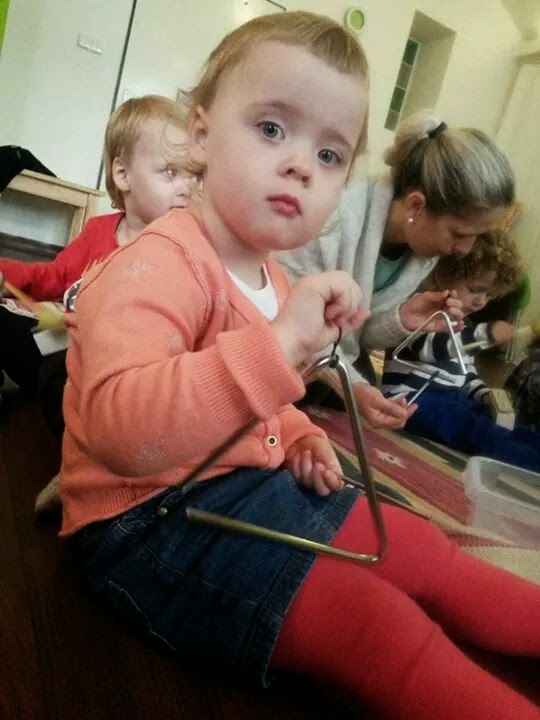
Kylie really feels the multidimensionality of
songs is just perfect for learning languages. 
Kylie: Ha! Do you have space for 25,000 words or more? A better questions would be why not. I could list a multitude of reasons for using songs to teach English to YL and quote all sorts of supporting research and theories about memory and prosody and links between language and song and pre-literacy etc, but for me, I really feel the multidimensionality of songs is just perfect learning languages. Combined with the fact that (most) YL love songs. The only thing that really surprises me is why YL teachers don’t use songs more. Songs are so natural. All over the world mothers naturally sing lullabies to their children. 

And songs have been used since the dawn of time (as cliché as that sounds), amoung other things, to express complicated ideas, remember important events and pass down genealogies. I guarantee you every child starting English knows at least one English song. Even if it’s ‘ Happy Birthday’.


Juan: When do you use songs? How long do you have the same song? 

Kylie: It depends on the age group and the class. For a VYL class I might start the lesson with a Hello song. Sing a song revising something during circle time. Sing a song which includes the target vocab for the lesson (numerous times). Sing a song while playing a game e.g. sing a food song while they are running to find food flashcards to keep those who aren’t having a turn engaged. Sing a song while coloring. Sing a song while tidying up. Sing a good bye song. Some songs are used for a particular theme and only occasionally revisited, whilst others, ‘favourites’ get used all year long.

Juan: Staging can make a big difference when presenting and practicing a song, especially with young learners. What are the important steps in your opinion when staging a song with young learners?

Kylie: I suspect that one of the reasons teachers don’t utilise songs more in the YL classroom is that they aren’t quite sure how. Choosing the song and when to use the song is equally as important as the staging and set up. The song should be relevant with meaningful language which doesn’t stretch the YL too much. I like to use visuals and movement, so using flashcards and actions when setting up a song and to set it up slowly and intentionally. 

This song is such a classic!
For example if you wanted to teach ’5 little monkeys jumping on the bed’ I would introduce this song after the learners are already familiar with numbers 1-5, monkey, head, bed, doctor, mummy’ and if they weren’t I might use some flashcards and mime the story sequence first in a kind of listen and do type activity. Once I’m sure they understand the key vocab and they have some actions then we can see. Actions are important for VYL in particular as it not only helps them to meet the language, it also provides opportunities for involvement for all (which I feel is even more important than the language at this early stage).

Some teachers give up teaching a song because the learners ‘aren’t into it’ or ‘aren’t doing it properly’. I personally don’t mind if kids are singing ‘5 leeedle mmmmm jumping na na bed. Na na off na na na bed.’ As my goal is to get them to move their tongues around and experiment with the sounds of English rather than join the national choir.

Teachers also need to remember that if they stand at the front of the class with the CD blaring and lip syncing, they can’t expect the kids to be excited by the song. The teacher should know it well and be enthusiastic. They certainly shouldn’t worry about being out of tune (the kids won’t care) but they should now the words and loo happy about singing.

Juan: I find that many songs in coursebooks have been adapted so much to fit a curriculum that in the end they lose their grace. Would you agree with this view? When do you ever create songs with your students? 

Kylie: I don’t want to knock the coursebook writers, as they do a great job, but yeah. All too often kids just don’t dig the coursebook songs. Either it’s too obvious, too boring, or too dry or too easy or too difficult to remember the tune. For VYL I like to create my own songs to very familiar tunes e.g. to Frere Jacques. That way the cognitive demands are lower and they can concentrate on other things. For my 8-12 year olds I encourage them to be silly and play with the song. Make it ‘better’. 


E.g. One of my favourite songs is Boom Chicka Boom.  It’s got very simple meaningless lyrics which are sung over and over in different ‘styles’ e.g. happy style, crying style, zombie style, Gaga style, robot style. Sometimes I get my learners to make the songs in the coursebook  ‘better’ by creating their own ‘style’ for the song. 


One memorable lesson, I witnessed a 9 year-old turn the world’s most boring song into something spectacular when she performed it to the class ‘Michael Jackson style’ while the class joined in with the chorus ‘zombie style’. For me a song helps consolidate language and is a great opportunity to play around with the sounds and prosody and intonation and just have fun with it.

For teenagers, the cover versions of songs in coursebooks can be laughable. I rarely ask teens to sing in class unless it is at summer camp and they’ve chosen to sing. Instead I like to get them to do a discourse analysis and discuss the language in the song or even rhyming patterns etc. Songs don’t have to be about singing. They are great for language work, listening activities, routines. I could go on….

Juan: I have noticed that some children and teens do not like to sing and to expose themselves in front of their peers. How do you involve these learners? 

Hey guys, we have just found one more puppeteacher!
Kylie: I think you’ll love my answer to this, Juan. I use puppets! And if I have no puppets we draw them on our finger tips. I also encourage them to imitate English speakers they know e.g. the teacher, a celebrity or maybe their mum. It can be just as embarrassing to ‘sound’ English as it is to make mistakes. Distancing with the aid of a puppet can be really helpful.


Juan: I have watched classes in which children sang and danced, but had no clue about what they were saying. What are some other traps that teachers of young language learners should be careful with? 

Kylie: It depends on the age and the aims of the activity. Sometimes I will spend time working on enunciating sounds and words and other times I just want the kids to have fun or play around with the intonation. Sometimes you just want to build their confidence via a ‘performance’. However, I am a realist, so I would choose a song that parents will be able to understand if it’s for an end of year performance in front of parents who are paying their fees. 

I think a trap a teacher can fall into is to do a song just for the sake of it. Sometimes teachers think of a song as an added extra for something ‘fun’ without really considering the potential learning outcomes. I try to keep learning or developmental goals in my mind when doing songs as well as fun so I don’t lose sight of the ‘learning’. I don’t mean to say I expect perfect production, I just mean I have a clear aim. Even if that aim is simple or non-linguistic in nature.


Kylie with her students at the end of a Summer Camp. 
Juan: You work hard with your students and you notice they have mastered a specific song. What happens then? 

Kylie: Any number of things. My VYL seem to master the colours songs from OUP’s Cookie and Friends quite quickly so I use this song for routines e.g. if we are lining up to go outside and waiting for a child who is taking a long time we might sing this song to avoid losing the line. I also use this song as a timer when they are colouring in a colour dictation. When the song stops. Pens down! 


Often the kids will let me know what song they want to know and when. I love singing the Cookie and Friends ‘Weather Song’ when putting on coats etc getting ready to go out or home, but sometimes the kids want to sing another English song and I’m fine with that. They normally choose the ones they master and it’s confidence building for them to sing it over and over and I like to encourage that.

Juan: What are your plans for the future? Thinking of recording something? 

Kylie: Well I’m quite busy now with my MA research, but I am actually working on a little book project, but that’s a bit hush for now. You’ll have to wait until it comes out. I’d love to create some youtube videos to add to the vast amount already out there but don’t own a video camera or sound equipment. One day. Maybe.

When I first met my husband I used to call him my Wiggle, because he looked like one of the Wiggles, and we have a little fantasy idea about creating a kids band (with his musician mates) and touring preschools. It would certainly be lots of fun!

Juan: Please leave us with a final musical message. 

Kylie: Other teachers might be reading this and think “she must have the voice of Mariah Carey to be doing so much singing”. Ha! I most certainly don’t. I’m just a regular girl who likes to have fun with English and Learning. For anyone wanting to introduce more songs and singing into their classroom, the most important thing is to be enthusiastic and have fun with it. Then you can consider other things like getting the language right, having an aim, staging etc. Use actions and simple, repetitive and meaningful language. Don’t give up. Have fun!

Thanks for interviewing me, Juan. Love and cuddles to Buddy.

Juan: My great pleasure, Kylie! Buddy says he misses you too! 

I invite everybody to know more about Kylie's work by paying her blog a visit. 


What is your take away after this interview? 
What ideas resonate with what you do with your students? 


Send you all a big hug from Tokyo!


Did you like it? Share it!
Thank you!